Keeping It in Good Shape: Knitting Machine Maintenance Made Simple
A knitting machine is a beautifully engineered thing, and like anything with hundreds of moving parts, it knits at its best when it's looked after. The good news is that machine maintenance isn't difficult or time-consuming — it's a handful of simple habits that take minutes, and they'll spare you the vast majority of the frustrations that send knitters running for help. Most of what feels like a "problem" with a machine is really just a maintenance step that got missed.
This is also where prevention meets cure. Nearly every common fault — dropped stitches, uneven tension, a carriage that won't glide — traces back to something small: a tired sponge bar, a build-up of lint and old oil, a machine that's been stored badly. Keep on top of these and you head off trouble before it ever starts. Learn to spot them and you'll fix in five minutes what might otherwise ruin an afternoon.
In this part we'll cover the essentials that keep a machine running sweetly: giving it a proper clean, replacing the sponge bar (the single most important thing you can do for reliable knitting), oiling it correctly, and storing it so it's ready to go whenever you are. Whether your machine is fresh out of the box or a well-loved secondhand find that needs some care, these are the routines that will keep it knitting reliably for years — and if something has already gone wrong, our Troubleshooting Library is only a click away.
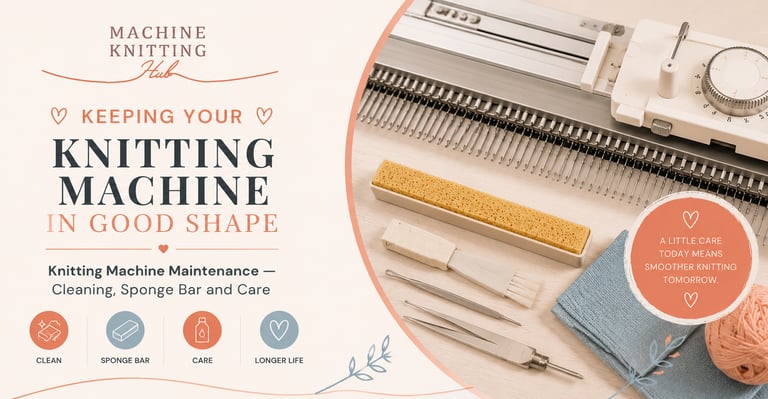
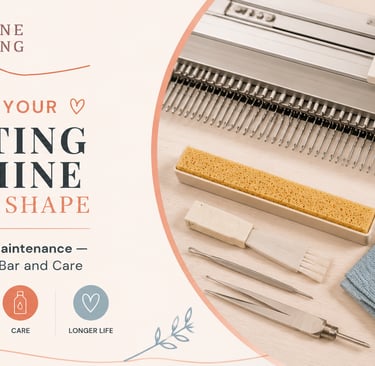
Cleaning a Metal Bed Knitting Machine
Generally, servicing a flat-bed metal knitting machine involves a few key steps
Replacing Your Sponge Bar
The sponge bar (sometimes called the needle retaining bar) is one of those small things that makes a big difference. When it's worn out, your needles will feel loose and bouncy — and that shows up in your knitting. Replacing it is one of the most satisfying maintenance jobs you can do, because the difference is immediate.
Keeping It in Good Shape
A well-cared-for machine knits better and lasts for decades. Here you'll learn the simple maintenance that prevents most problems before they start — cleaning, the all-important sponge bar, oiling and storage — so your machine stays reliable and ready whenever you are.


Finding the Yarn That Plays Nicely
The right yarn makes all the difference, and the wrong one causes endless frustration. This part covers what yarn works best on a machine, whether you can use your hand-knitting stash, how to understand weights and cones, and where to find yarn that runs smoothly every time.


Your machine has been waiting for this.
Stop going it alone. The hard parts are easier when someone's already been through them.